“Mangpa”-A Rai’s priest
The Rai's priests, known as Mangpas and Mangmas, play a crucial role in their society. They perform traditional rituals like the Samkhalung, which are meant to appease household deities and ensure the well-being of family members.The Nakchhong (also called Mangpa or Bijuwa in different Rai communities) is the traditional priest and spiritual leader of the Kirat Rai community. The Nakchhong is responsible for performing all major rituals, ceremonies, and spiritual functions according to the Kirat Mundhum. The position is typically hereditary and the priest serves as the bridge between the community and the spiritual realm.
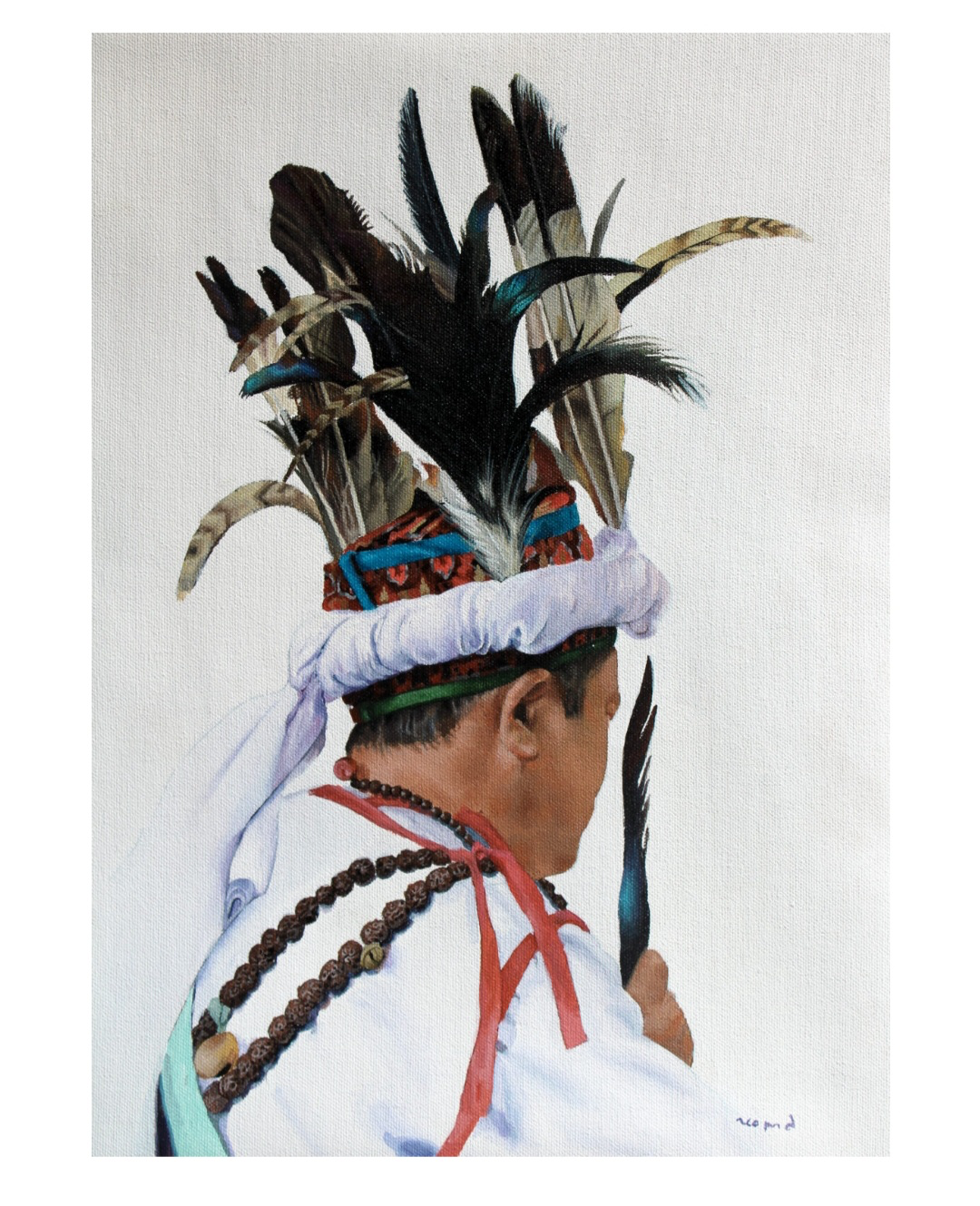
What makes the Mangpas and Mangmas truly remarkable is their dual role as both faith healers and traditional physicians. Using herbal medicines, they possess the knowledge and skills passed down through generations to offer medical treatment. Their expertise goes beyond the physical realm as they possess a unique spiritual power to conduct the Chinta ceremony - a form of shamanic ritual specific to the Rai community. During this ceremony, they can prophesy and provide insights into the family and society.
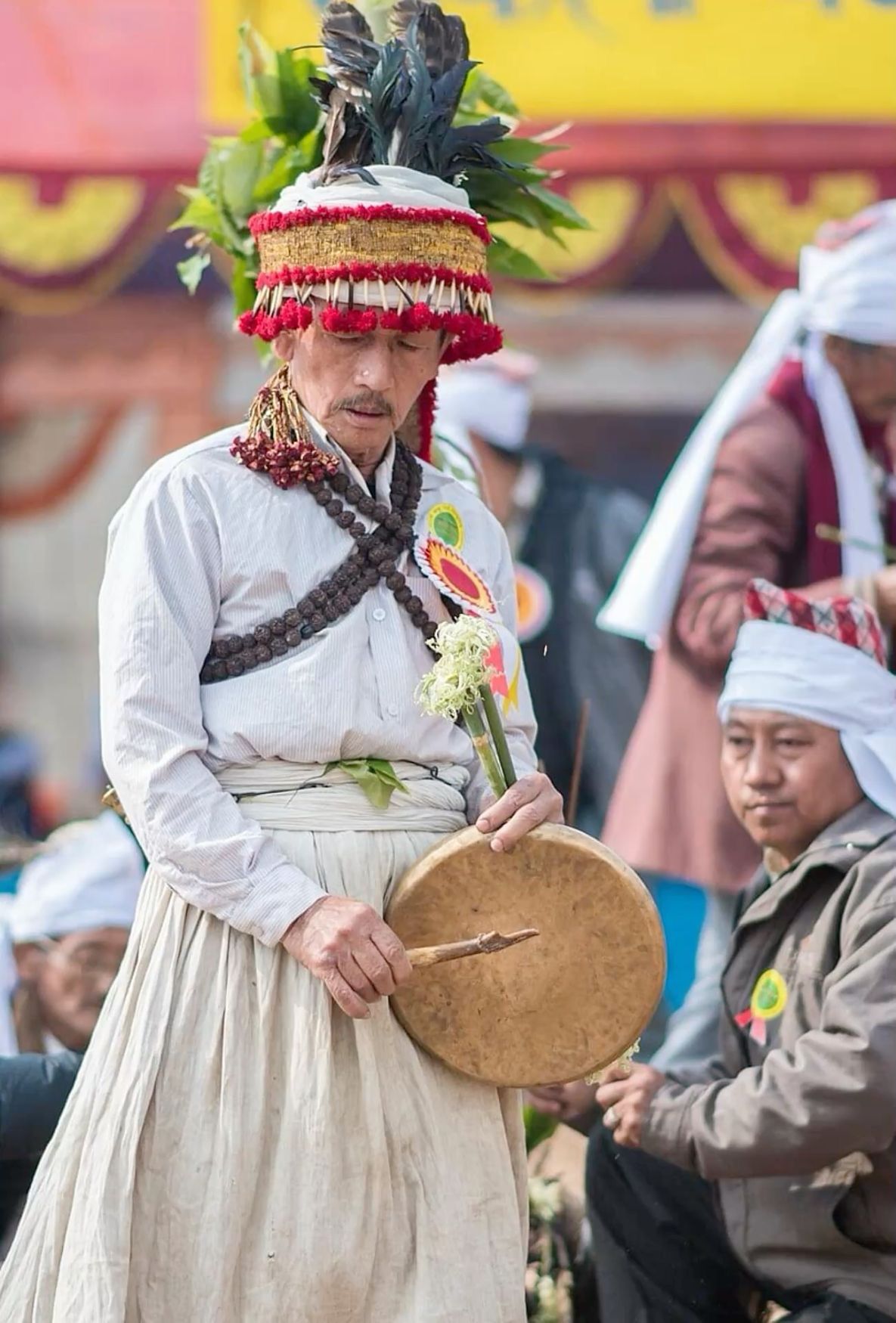
Interestingly, their spiritual abilities are often hereditary, but it is not uncommon for individuals outside the bloodline to also possess this power. When possessed by the Tshee spirit, they can reveal hidden secrets of the past and present. Additionally, they are responsible for conducting funeral rites and death-related rituals, where they are believed to be a conduit for the deceased person's spirit to communicate with their family.The religious beliefs and practices of the Rai community are deeply rooted in the Mundhum, an oral tradition that encompasses appeasements to deities, evil spirits, supernatural beings, and ancestors.Through my artwork, I hope to capture the captivating essence of the Rai community's unique culture, spirituality, and profound connection with their ancestral traditions.
Role and Responsibilities The traditional Rai priest serves multiple crucial functions:
- Ritual ceremonies: The priest leads all major rituals including birth ceremonies, marriage ceremonies, death rituals, and festivals.
- Mundhum recitation: The priest is the custodian of the Mundhum - the sacred texts and oral traditions. He recites the appropriate texts for each occasion.
- Sacred site oversight: The priest manages and conducts rituals at sacred sites (Chinlung, Suptulung, and other nature worship sites).
- Divination and guidance: The priest provides spiritual guidance, reads omens, and helps community members navigate important decisions.
- Conflict resolution: Traditionally, the priest played a role in resolving community disputes through spiritual and customary means.
Selection and Lineage The position of priest is typically hereditary - passed down through specific families or lineages within the community. The training involves years of learning the Mundhum, rituals, and spiritual practices from elders and predecessors. Variations across Rai groups Different Rai subgroups use different terms for their priests:
- Nakchhong: Used in many Rai communities, especially Khambu
- Mangpa: Used in some Rai communities
- Bijuwa: Used in other Rai communities
These variations reflect the linguistic and cultural diversity within the Rai community.
Written by Deo Prasad Rai