Rai Wedding Traditions and Marriage Customs
Marriage is one of the most important social institutions in Rai culture. Rai weddings are elaborate, multi-day celebrations that involve the entire community and follow traditions passed down through generations. While customs vary by subgroup (Khambu, Limbu, Sunuwar, Chamling, etc.), there are common elements that unite all Rai wedding traditions. The Marriage Process Rai marriages typically follow a structured process that involves both families and the community:
- Initial Approach (Pancha): The groom's family sends a representative to the bride's family to propose the match. This is often done with a small gift of alcohol or food as a gesture of goodwill.
- Family Negotiation: Elders from both families meet to discuss the match, including compatibility, family background, and the bride price (known as "Sunwala" or "Pewa" in some communities).
- Bride Price (Sunwala): The groom's family provides a bride price to the bride's family. This is not a purchase but a gesture of respect and compensation to the bride's family for raising her. The amount varies by region and family.
- Engagement (Naya Dhog): Once agreed, an engagement ceremony is held where the couple is formally betrothed. Gifts are exchanged between families.
- Wedding Day (Biha): The main wedding ceremony is a grand celebration involving rituals, feasting, music, and dancing that can last several days.
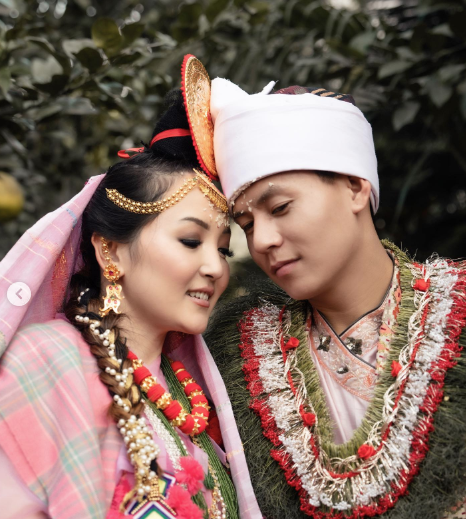
Wedding Rituals
The Rai wedding ceremony includes several key rituals:
- Mandal:
The wedding takes place under a decorated canopy or mandap, often decorated with flowers, leaves, and traditional fabrics. - Kanyadaan: The bride's father gives away the bride to the groom, symbolizing the transfer of responsibility.
- Sindoor and Mangalsutra: The groom applies sindoor (vermillion) to the bride's hair parting and ties a sacred necklace (mangalsutra) around her neck.
- Saptapadi: The couple takes seven steps together around a sacred fire, each step representing a vow and commitment.
- Blessings from Elders: The couple receives blessings from elders, priests (Nakshatra), and community members.
- Feast (Bhoj): A grand feast is prepared with traditional Rai dishes, meat, rice, and drinks. The entire community is invited to celebrate.
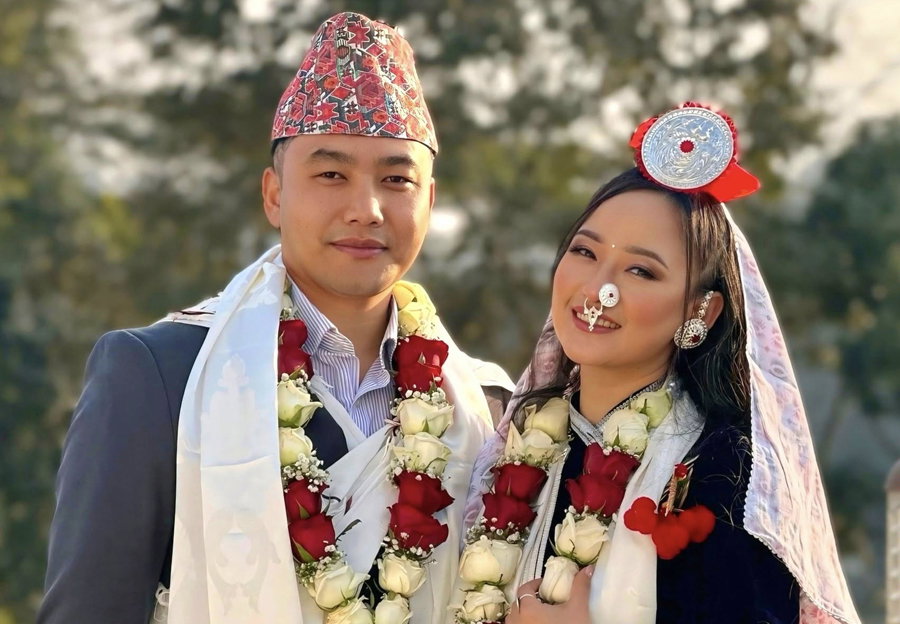
Traditional Wedding AttireRai brides and grooms wear elaborate traditional clothing:
- Bride: Wears a red or maroon wrapped skirt (pachhat), a matching blouse, and extensive gold and silver jewelry. The bride's hair is decorated with flowers and ornaments. A traditional headpiece or veil may be worn.
- Groom: Wears a dhoti, kurta, and traditional vest (cholo). The groom may also wear a turban or headband and carry a traditional knife (khukuri) as part of the attire.
Post-Wedding CustomsAfter the wedding, several customs are observed:
- Grihapravesh: The bride is welcomed into the groom's home with rituals and blessings.
- Reception (Walima): A reception is held where the newlyweds are introduced to the wider community.
- Visiting the Bride's Family: The couple visits the bride's family after a few days, maintaining the connection between the two families.
Modern AdaptationsWhile traditional Rai wedding customs remain strong, modern influences have led to some adaptations:
- Weddings may incorporate elements from other cultures, especially in urban areas.
- Photography and videography are now common at Rai weddings.
- Some couples choose to register their marriage legally in addition to the traditional ceremony.
- Despite these changes, the core rituals and community involvement remain central to Rai weddings.