Sacred Roots: Understanding the Birth Rituals of the Kirat Rai Community
Introduction
The Kirat Rai, an indigenous ethnolinguistic group native to the eastern Himalayan hills of Nepal and parts of India (such as Sikkim and Darjeeling), possess a culture woven from a deep reverence for nature and ancestral spirits. Their entire lifestyle is guided by the Mundum an ancient, oral philosophy and spiritual code passed down through generations of shamans. Within the framework of the Mundum, life transitions are sacred milestones, and none is more foundational than the arrival of a new child.Birth rituals in the Kirat Rai community are not merely domestic celebrations; they are profound spiritual events designed to secure the physical health of the mother and child, elevate their vital life force, and formally tie the newborn to the living clan and ancestral lineage.
1. The Arrival and the Sacred Soil
The spiritual welcoming of a child begins the moment they enter the physical world. In traditional Rai villages, a sharp, freshly sliced bamboo sliver (bâns ko choya) was historically used to sever the umbilical cord, keeping the birth entirely connected to natural elements.The treatment of the placenta and umbilical cord reflects the deep bond the Rai share with their land and home. Rather than being discarded, the placenta is wrapped carefully and buried deep under the main wooden pillar (mi-kham) of the traditional house or in a clean, undisturbed plot of earth nearby. Culturally, the side of the house chosen reflects the gender of the child: the right side for a boy and the left side for a girl. This act symbolizes grounding the child's soul to their ancestral home and the earth that will sustain them.
2. Purification and Naming: The Rule of Three and Four
Immediately following birth, the household enters a temporary period of spiritual impurity, known locally as chhoat. During this time, the mother is kept away from the sacred areas of the home, particularly the kitchen.To lift this impurity, a purification and naming ceremony (Navaran) is held. The timing of this ritual is strict and deeply symbolic, dictated by a core Mundum belief regarding human souls:
- For a Baby Girl: The ceremony takes place on the 3rd day after birth, as women are believed to possess three vital spiritual elements or souls.
- For a Baby Boy: The ceremony takes place on the 4th day (or 5th day in certain sub-clans), corresponding to the four spiritual elements belonging to men.
During the ritual, a clan elder or traditional shaman (Dhami, Naksi, or Ngopa) recites sacred oral verses from the Mundum. They sprinkle water infused with Titepati (mugwort leaves) throughout the house, over the mother, the baby, and the sacred three-stone kitchen hearth (Suptulung). Once purified, the baby is given their name—traditionally chosen based on ancestral names, the day of the week, or the natural conditions during birth.
3. Saya Hangma: Raising the Spiritual Soul
Perhaps the most uniquely defining aspect of a Kirat Rai birth ritual is Saya Hangma (the ritual of raising the Saya).The Rai believe that every human possesses Saya—a spiritual crown, dignity, and inner life force. If a person's Saya is low, they become weak, fearful, prone to illness, and vulnerable to negative energies. During the naming ceremony, the shaman performs a specific prayer aimed at uplifting the Saya of both the newborn and the recovering mother. By blessing the head and calling upon the ancestors, the community ensures the child grows up with the resilience, honor, and courage required to navigate life.
4. Chhoyong: The First Taste of Grain
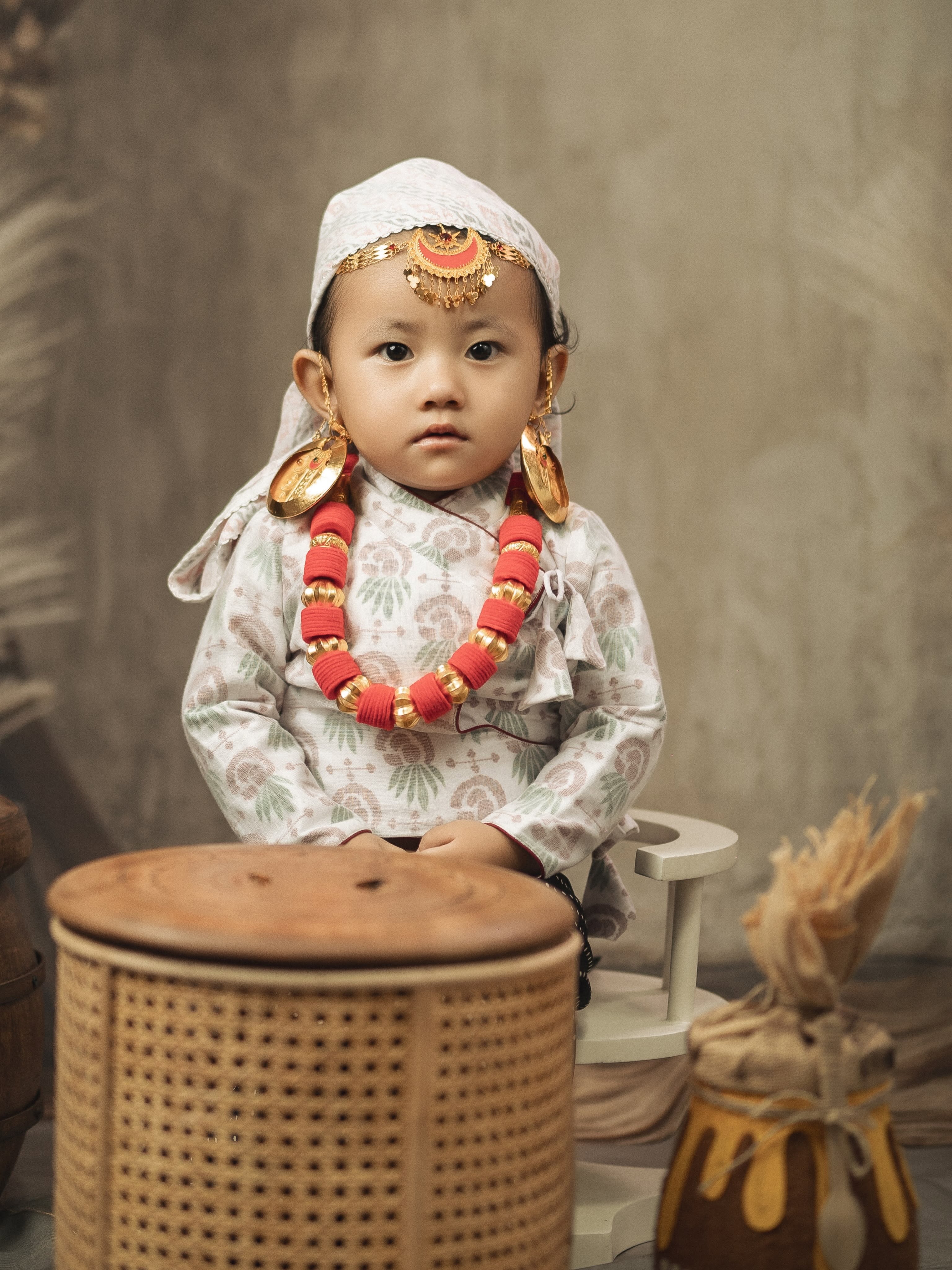
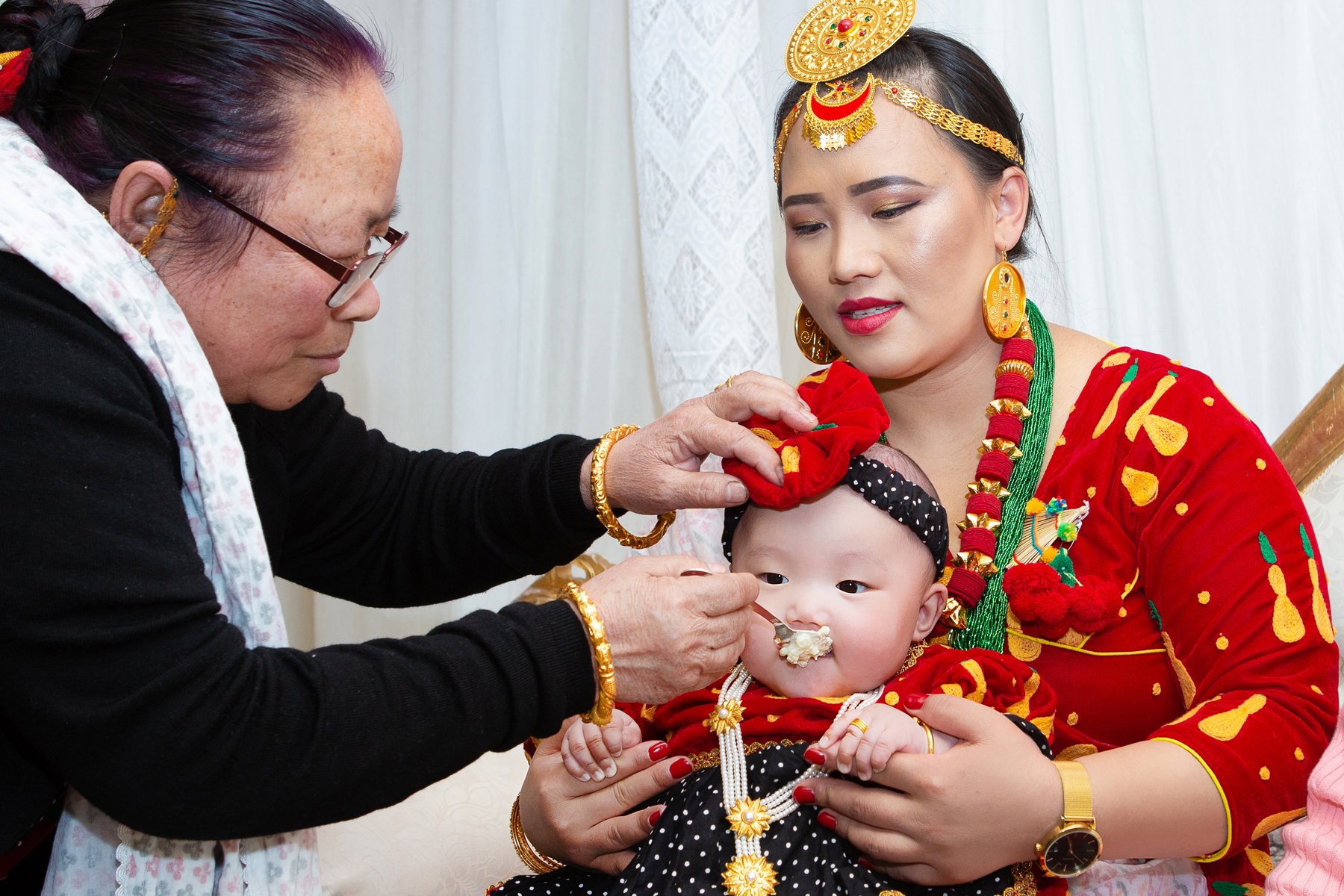
The final phase of early childhood rituals is the rice-feeding ceremony, known as C. This marks the child's transition from an exclusive milk diet to solid food, symbolizing their reliance on the fruits of the earth.Following the natural timeline of development, Chhoyong is celebrated in the 5th month for a baby girl and the 6th month for a baby boy. The maternal uncle (Mama) holds a position of high honor during this feast. The infant is dressed in vibrant traditional attire and ornaments, and the uncle feeds them their very first bite of grain. Family and neighbors gather to offer blessings, gifts, and wealth, officially cementing the child’s place as an active, supported member of the extended community.
Cultural Preservation in a Modern World
As the Kirat Rai community digitizes its unique language scripts and navigates modern life, these oral traditions remain a vital anchor. The birth rituals of the Rai are a testament to a worldview where a human life does not exist in isolation. Instead, from the third or fourth day of existence, a Kirat Rai child is taught that they are intrinsically linked to the soil beneath their home, the family that surrounds them, and the ancient ancestors who watch over them.Would you like to expand this article by adding details on traditional Rai naming conventions, or should we explore how these birth rituals differ slightly among sub-clans like the Bantawa, Kulung, or Chamling?