The Anthropological and Ritual Foundations of Pitri Puja in the Kirati Rai Community
Introduction
In the Kirati Rai community an indigenous ethnic group primarily native to the eastern hills of Nepal (traditionally known as Majh-Kirat) Pitri Puja (ancestor worship, often referred to locally as Kul-puja) serves as the foundational pillar of spiritual, social, and cultural life. Rooted in Mundhum, the oral socio-religious philosophy and ethical guide of the Kirat people, Pitri Puja is not merely a religious obligation but an ongoing dialogue between the living and the spiritual essence of their deceased forebears.
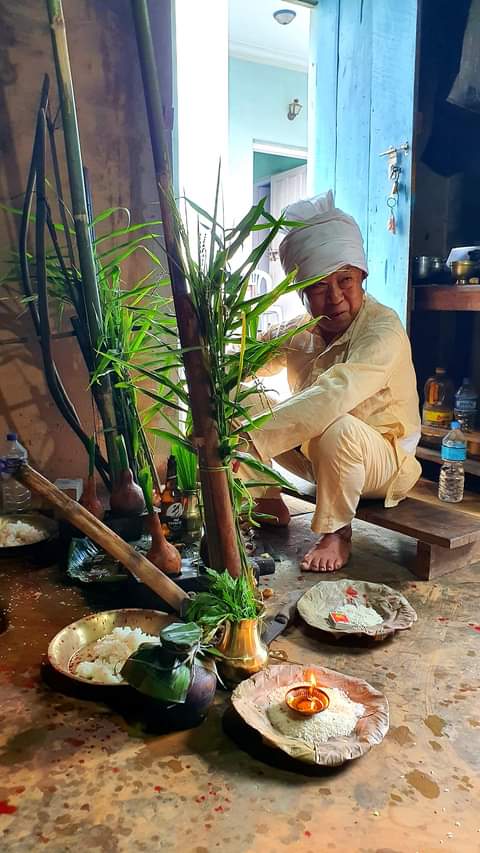
The Core Sacred Space: Suptulung
The absolute focal point for all household ancestral rites is the Suptulung (the ancestral sacred hearth). Positioned in the main room of a Kirati Rai household, the Suptulung is structurally composed of three distinct stones embedded into the earth, each holding unique symbolic names and ancestral alignments:
- Sitlung (or Sawalung): Represents the male ancestral lineage.
- Mitlung (or Chhekulung): Represents the female ancestral lineage.
- Rumilung (or Taralung): Functions as the witness stone.
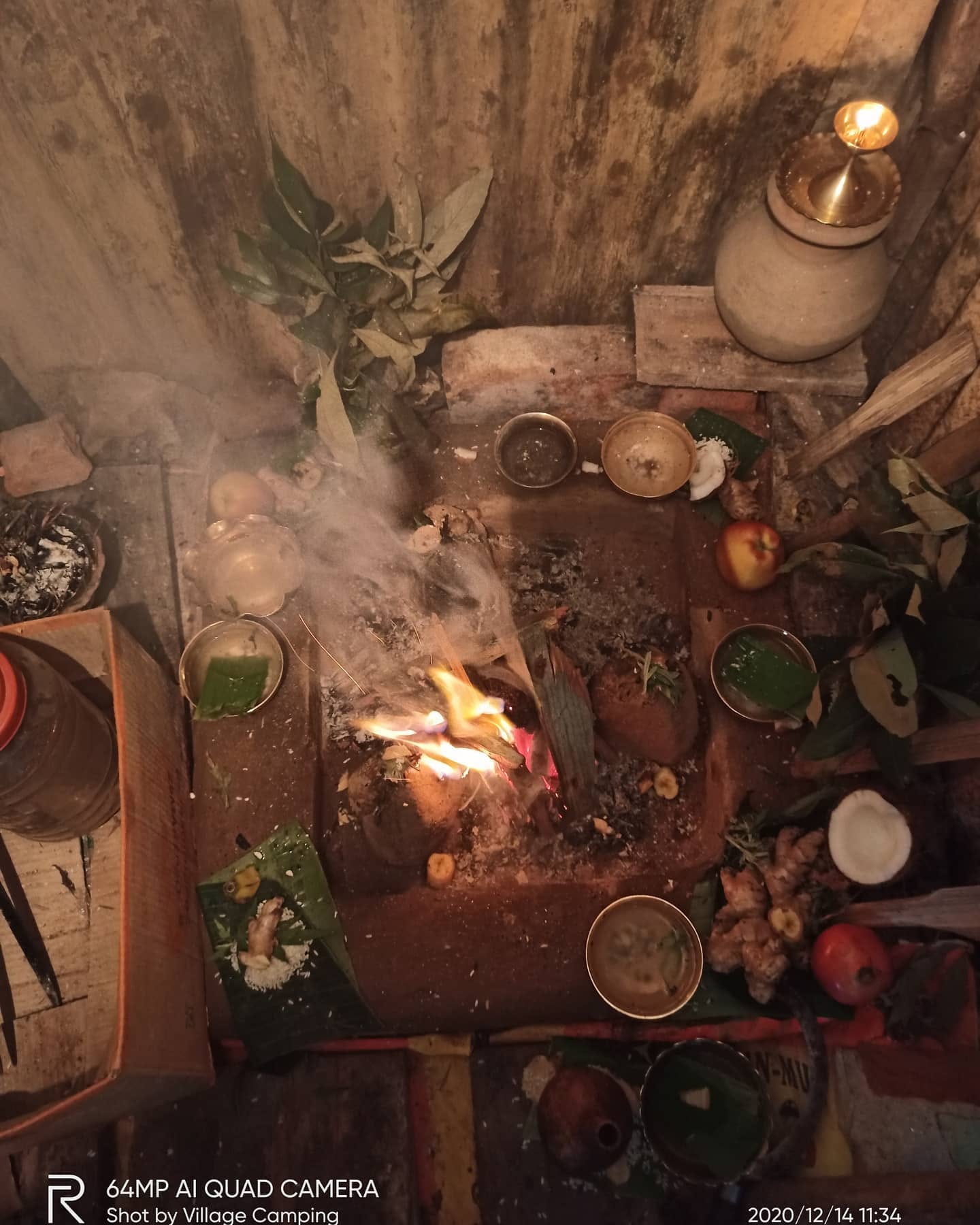
According to Rai belief, the collective spirits of the family's deceased ancestors known broadly as Samkhamaang permanently reside or rest within these hearthstones. The Suptulung is viewed as a literal gateway to the ancestral realm, making it a highly protected and strictly venerated shrine where any deviation from proper custom is traditionally believed to invite illness or misfortune upon the household.
Seasonal and Agricultural Synchronization: The Nwagi Cycle
Pitri Puja is fundamentally tied to the agricultural calendar. It is traditionally performed at least twice a year typically during seasonal transitions corresponding with the Ubhauli (spring/sowing season) and Udhauli (autumn/harvest season) periods. The most vital manifestation of Pitri Puja occurs during the harvest season in autumn (the month of Kartik or Mangsir, spanning October to December), through a festival called Nwagi (or Nuwagi).
- The First Fruits Rule: A strict cultural taboo dictates that no household member may consume newly harvested crops such as paddy (rice), millet, ginger, or cardamom until the first fruits of the yield are presented to the ancestors.
- The Ritual Cleaning: Before the ceremony begins, the ancestral room housing the Suptulung is meticulously cleaned.
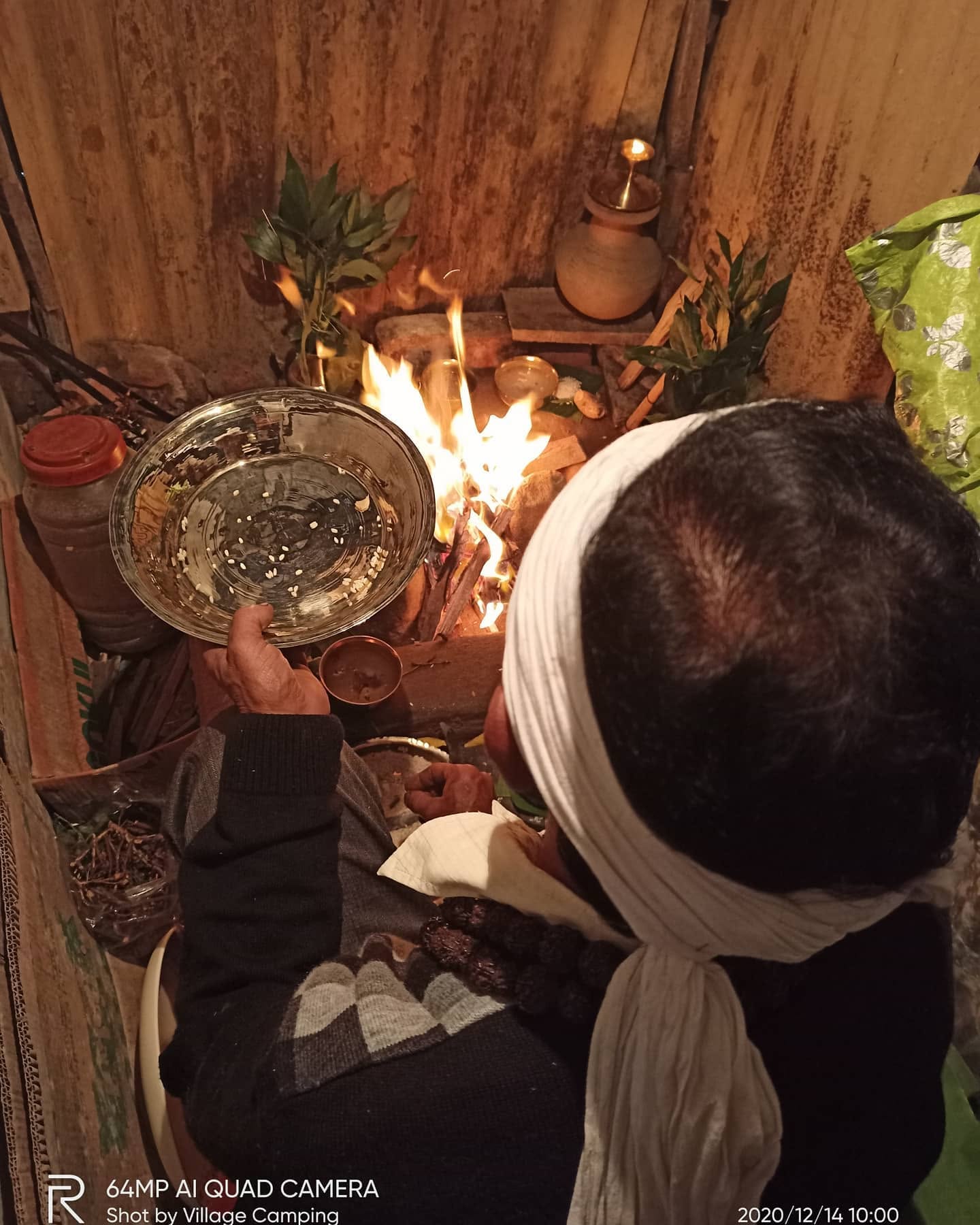
- Offerings: Freshly harvested grains are prepared into various dishes alongside locally brewed alcohol. The ancestors are invoked as honored guests, fed with these first fruits directly upon the three stones of the fireplace, and petitioned to remain benevolent, protective, and to grant family prosperity.
Ritual Specialists and Execution
The execution of Pitri Puja is dependent on traditional leadership. It is typically conducted either by the elder male head of the household or by a specialized indigenous priest/shaman, known variously across different Rai linguistic sub-groups as a Mangpa, Nakchhong, Nakcho, or Bijuwa. During collective or major clan observances, the Mangpa leads oral recitations of the Mundhum, communicating directly with the spirits through established shamanic chants and rituals. Depending on the specific Rai clan, various items and symbolic artifacts (such as a chindo or decorative feathers) are integrated to complete the kul-puja.
Social and Communal Function
Beyond its metaphysical elements, Pitri Puja is a crucial driver of social cohesion. The Nwagi and seasonal ancestor worships function as half-day or multi-day family feasts. Extended relatives and neighbors are explicitly invited to the ancestral home. Once the spiritual offerings at the hearth are completed, the remaining food and alcohol are served to the guests. This gathering acts as a mechanism to reinforce kinship bonds, pass down oral traditions to the younger generation, and maintain the collective identity of the Rai community.